
Mobile Betting Strategy: How to Win More
 Available in US
Unlock advanced techniques and smart habits to maximize your winnings and minimize risks with effective mobile betting app strategies.
Table of Contents
- Mobile Advantages You’re Not Using
- Line Shopping: The Foundation Strategy
- Live Betting Tactics for Mobile Users
- Bankroll Management in the One-Tap Era
- Bonus Hunting Without Getting Burned
- Timing Your Bets for Maximum Value
- Using App Analytics and Tracking Tools
- Multi-App Coordination Strategy
- Avoiding Mobile-Specific Traps
- Building Your System
Mobile Advantages You’re Not Using
Mobile betting apps fundamentally changed sports betting, but most bettors use them exactly like they’d use a desktop computer or retail sportsbook they’re just doing the same thing on a smaller screen. That’s leaving money on the table. Mobile betting creates unique strategic opportunities that don’t exist in other formats, and it introduces specific risks that desktop betting never presented. Understanding these mobile-specific dynamics separates profitable mobile bettors from those who are just gambling on their phones.
The speed and convenience of mobile betting cuts both ways. You can place a bet in eight seconds from anywhere, which enables opportunistic value capture when you spot a mispriced line. You can also blow through your weekly budget in three minutes during a bad run because the friction between impulse and execution essentially doesn’t exist anymore. The same technological advantages that make mobile betting appealing create psychological vulnerabilities that apps are designed to exploit.
This guide focuses on strategies that specifically leverage mobile betting’s unique characteristics while protecting you from its unique dangers. We’re not covering basic betting strategy like understanding juice or reading odds that’s universal across all betting formats. We’re covering mobile-specific tactics like coordinating line shopping across apps in your pocket, exploiting promotional timing windows, managing bankroll when money moves instantly, and avoiding tilt bets when betting is literally one tap away.
The strategies here assume you already understand betting fundamentals. If you don’t know what closing line value means or how point spreads work, master those basics before implementing mobile-specific strategies. These tactics optimize an already solid betting foundation they won’t fix fundamental strategy problems, and they’ll actually amplify losses if you’re making poor betting decisions to begin with.
Line Shopping: The Foundation Strategy
Line shopping is the single most impactful strategy mobile betting enables at scale. Ten years ago, comparing odds across multiple sportsbooks meant calling different locations or visiting multiple websites. Now you can check five apps in thirty seconds while standing in line at the grocery store. This accessibility makes line shopping practical for everyone, not just professional bettors with sophisticated setups.
The Mathematics of Line Shopping
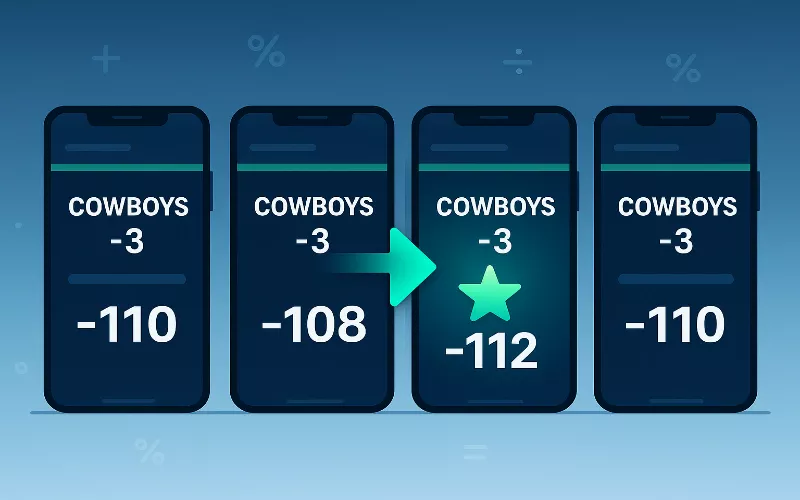
The numbers are straightforward. If you’re betting NFL spreads at -110 when you could find -108 elsewhere, you’re paying an extra two cents of juice on every bet. That sounds trivial until you calculate it across a season. Bet $100 per game across 100 games over a season, and that two-cent difference costs you roughly $180 in extra juice paid. Bet $500 per game, and it’s $900. The difference compounds dramatically with volume.
The edge becomes more significant on moneylines and props where price variations are wider. You might find a favorite at -135 on FanDuel and -128 on DraftKings. That seven-cent difference is enormous it’s literally the difference between profitable and unprofitable betting on marginally +EV situations. Props can vary by 15-20 cents between books because they’re less efficient markets with wider spreads.
The cumulative impact over a year of serious betting is measured in thousands of dollars. A bettor placing 500 wagers annually at an average bet size of $200 who consistently gets two cents better prices through line shopping saves roughly $1,800 in juice annually. That’s nearly a 1% improvement in expected return, which is the difference between a losing year and a profitable one for many bettors.
The Logistics of Multi-App Line Shopping
Effective line shopping requires having accounts and funds at three to five different apps minimum. This means going through identity verification multiple times, depositing money across platforms, and tracking balances in multiple places. The setup investment is real, but the ongoing process is surprisingly simple once established.
Before placing any bet over $50, the discipline is checking odds across all your apps. You’ve decided you want to bet Cowboys -3. Open FanDuel, DraftKings, bet365, BetMGM in succession. Record the odds each offers: -110, -108, -110, -112. DraftKings offers the best price. Place the bet there. This process takes 45 seconds. The value extracted compounds over every bet you place.
The psychological barrier most bettors face isn’t the time cost it’s genuinely negligible. It’s the switching cost. You’re most comfortable with FanDuel’s interface. You already have FanDuel open. Checking other apps and potentially betting on DraftKings feels like friction. Overcoming this psychological preference for convenience over value is the real challenge. The bettors who consistently line shop treat it as non-negotiable routine, like checking your mirrors before changing lanes while driving.
Tools and Systems for Line Shopping
Several approaches exist for systematizing line shopping. The manual approach involves literally opening each app and checking odds sequentially. This works fine for occasional bets but becomes tedious at higher volumes. The efficiency improves with practice experienced line shoppers develop muscle memory for navigating to specific markets quickly on each app.
Some bettors use odds comparison websites that aggregate lines from multiple books. These tools provide quick visibility into which book has the best price on any given market. The limitation is they don’t always capture every book’s odds in real-time, and the odds might change between checking the comparison site and actually placing your bet. They’re useful for initial screening but verify the line on the actual app before betting.
Spreadsheet tracking helps for bettors placing many bets. Record which app offered the best price on each bet type historically. You might discover that DraftKings consistently has the best NFL prop odds, bet365 has the best soccer lines, and FanDuel has the best NBA spreads. These patterns let you check your highest-probability app first, saving time on average while still verifying on other apps for significant bets.
When Line Shopping Doesn’t Matter
Line shopping becomes less critical on very small recreational bets. If you’re betting $10 on a game for entertainment while watching with friends, the two-cent juice difference costs you twenty cents in expectation. Spending a minute to save twenty cents doesn’t make economic sense. Line shopping is for bets of $50+ where the absolute dollar value saved justifies the time invested.
Live betting sometimes moves too quickly to line shop effectively. If you’re trying to bet a specific in-game situation and the line is changing rapidly, taking thirty seconds to check multiple apps might mean missing the bet entirely. The opportunity cost of missing the bet exceeds the value of finding slightly better odds. For fast-moving live situations, accept the odds on your primary app and execute quickly.
Live Betting Tactics for Mobile Users
Live betting represents the most dramatic shift mobile betting created. The ability to bet from your couch while watching a game, reacting to developments in real-time, fundamentally changes the strategic landscape. It also introduces the highest-risk betting environment for impulsive or emotional decisions.

Understanding Live Betting Line Movement
Live betting lines adjust constantly based on game flow, score changes, and betting action. The sportsbook’s algorithm tries to set odds that account for current game state while protecting the book from getting middled by sharp bettors who process information faster than the algorithm adjusts. This creates brief windows of exploitable inefficiency if you’re watching closely and thinking clearly.
The most common pattern is overreaction to recent events. A team scores a touchdown and the live line swings dramatically in their favor, often overshooting the appropriate adjustment. If you were watching the drive and recognized it resulted from a fluky turnover or unsustainable luck, you can bet the opposite side at inflated odds before the line corrects. The key is having conviction based on actual game flow rather than just betting against short-term momentum reflexively.
Weather changes during games create live betting opportunities, particularly in football. A game starts in moderate conditions and rain begins falling heavily in the second quarter. The total will adjust downward, but it might not adjust enough if the book’s algorithm uses generic weather impacts rather than accounting for specific conditions like field drainage quality or wind direction. Bettors watching live and understanding weather impacts better than the algorithm can exploit these gaps.
Mobile-Specific Live Betting Advantages
Mobile betting’s speed advantage is most pronounced during live betting. When you identify an edge during a game, you can execute immediately no need to move to a computer or drive to a sportsbook. This speed matters because live lines move constantly. A betting window that exists for sixty seconds is accessible on mobile but might be missed on desktop if you’re not sitting at your computer.
The multi-screen advantage mobile provides is underrated. You can watch the game on TV with the betting app open on your phone, switching between watching and betting in seconds. Desktop betting requires toggling between the game stream and the betting website, missing game action while placing bets. Mobile’s second-screen nature lets you stay connected to both simultaneously.
Push notifications from betting apps alert you to game developments and line movements. If you have an existing bet and the line moves significantly, you might receive a notification about cash-out opportunities. If you’re tracking specific games, you get score updates that might trigger betting ideas. These real-time alerts enable opportunistic betting that wouldn’t happen if you weren’t actively monitoring.
Dangers of Mobile Live Betting
The flip side of mobile live betting’s accessibility is compulsive betting. When your team is losing and you’re emotionally invested, the ability to instantly place a hedge bet or double-down bet is one tap away. There’s no friction, no cooling-off period, no physical barrier between impulse and execution. This lack of friction leads to tilt betting at a scale desktop betting never enabled.
The one-tap bet confirmation many apps use for repeat bets is intentionally designed to reduce friction. It’s excellent for user experience when you’re betting rationally. It’s catastrophic for bankroll preservation when you’re chasing losses emotionally. DraftKings’ interface makes it remarkably easy to place five bets in 45 seconds during a commercial break while your team is getting blown out. That speed is the opposite of helpful during emotional betting moments.
Chasing losses during live betting is uniquely dangerous because the pace enables consecutive mistakes rapidly. You bet your team to win pregame. They’re losing at halftime. You bet them to cover a smaller spread live. They continue losing. You bet them to score next. They don’t. Three losing bets in thirty minutes instead of three losing bets across three days. The emotional trajectory and bankroll damage happen in compressed timeframes.
Practical Live Betting Rules for Mobile
Successful mobile live bettors implement rigid rules that override emotions. The most effective is a maximum number of live bets per game typically one or two. Once you’ve placed two live bets on a game, you’re done betting that game regardless of developments. This prevents the cascading series of bad decisions that destroy bankrolls during single games.
Another critical rule is mandatory wait times between live bets. After placing a live bet, you must wait five minutes before placing another live bet on any game. This cooling-off period lets emotional reactions subside and forces more deliberate decision-making. It’s annoying when you want to bet immediately, which is exactly when you need the restriction most.
Pre-identifying live betting spots before games helps. If you’re watching Eagles-Cowboys, decide before the game what scenarios would trigger live bets. Maybe you’ll bet the over if the first quarter is scoreless, expecting scoring to regress to the mean. Having predetermined conditions prevents reactive betting based on emotions during the game. You’re executing a plan rather than improvising.
Bankroll Management in the One-Tap Era
Traditional bankroll management advice assumes betting involves enough friction that you won’t accidentally blow your entire bankroll in an afternoon. Mobile betting eliminated that safety margin. The ease of deposits and instant bet placement means you can go from “I’ll bet conservatively” to “I’ve lost my entire month’s budget” in under an hour.
Setting Structural Limits Through Apps
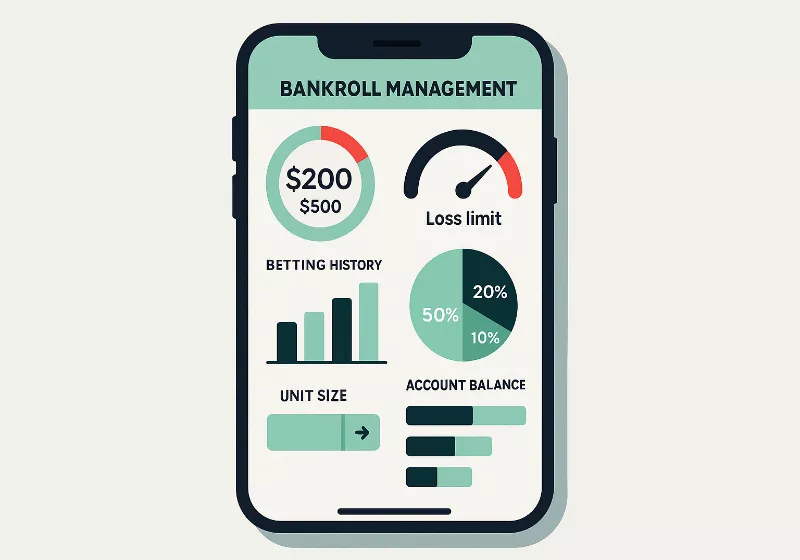
Every major betting app offers deposit limits, loss limits, and time limits. These aren’t just responsible gambling window dressing they’re essential bankroll management tools for mobile betting. Setting a $200 weekly deposit limit before you start betting prevents you from depositing $500 more after a bad streak. The app enforces discipline that your emotional state can’t override.
The critical detail is that increasing these limits requires a 24 to 72 hour waiting period. You can’t impulsively raise your limit during a bad run you submit a request, then wait days while cooler heads prevail. Most limit increase requests submitted during tilt are canceled by the same bettor the next day after emotions settle. The delay is the entire point.
Loss limits work differently than deposit limits but serve similar purposes. A $300 weekly loss limit means once you’ve lost $300 in a week, you can’t bet again until the next week starts regardless of your balance. This caps your maximum downside during a bad run. For bettors with good discipline during normal times but poor discipline during tilting, loss limits provide essential safety rails.
The Separate Betting Account Strategy
One of the most effective mobile bankroll management strategies is maintaining a separate bank account exclusively for betting. Fund it monthly with your betting budget say $500. Link only this account to your betting apps. When the account is empty, you’re done betting that month. There’s no ability to transfer more money quickly because your primary checking account isn’t linked.
This creates natural friction that mobile betting otherwise lacks. Running out of money in your betting account doesn’t feel like “I’m out of betting money,” it feels like “I need to log into my bank, transfer money from checking to betting account, wait for it to clear, then deposit to the app.” That multi-step process introduces enough delay to break the cycle of impulsive reloading during bad runs.
The separate account also makes tracking actual betting performance clearer. At the end of the month, your betting account balance shows your profit or loss precisely without mixing in regular expenses or income. This clarity helps you recognize if betting is genuinely profitable or if you’re lying to yourself about your results.
Unit Sizing on Mobile
Traditional bankroll management recommends betting 1-5% of your bankroll per wager depending on confidence. That guidance still applies, but mobile betting introduces a unit sizing pitfall casual unit creep. You start the month betting $50 per game. By week three, you’re somehow betting $80-100 per game without consciously deciding to increase unit size.
This happens because mobile betting lacks the physical reminder that cash betting provided. Pulling $100 from your wallet to place a bet makes you viscerally aware you’re risking $100. Typing “100” into a bet slip on your phone doesn’t trigger the same psychological weight. The abstraction of digital money makes larger bets feel less consequential than they are.
Combat this by setting explicit unit sizes at the start of each month and writing them down. Your standard unit is $50. Your large unit for high-confidence plays is $75. Your small unit for lottery tickets is $25. Refer to this written document before every bet. When you catch yourself typing $90 into a bet slip, you realize you’ve drifted from your plan and can correct.
Bonus Hunting Without Getting Burned
Promotional offers are central to betting app economics. Apps spend $200-500 to acquire each customer through welcome bonuses, then aim to profit from those customers long-term. Understanding this dynamic helps you extract bonus value without falling into promotional traps.
Calculating Real Bonus Value
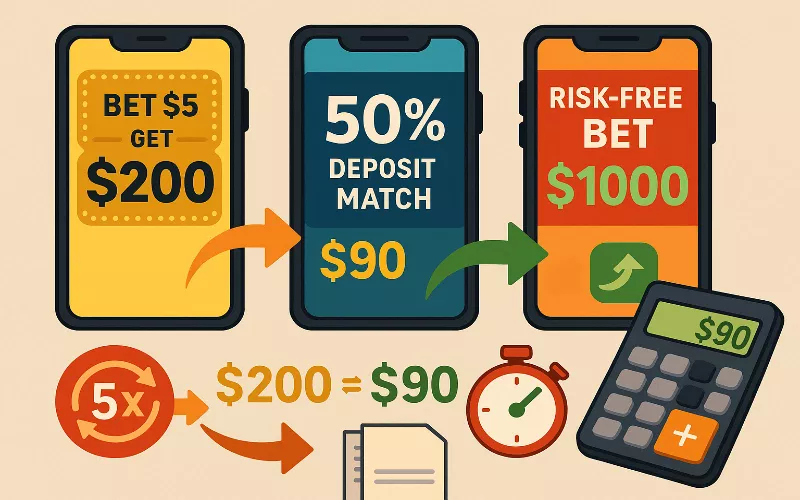
Welcome bonuses advertised as “Bet $5, Get $200” sound like free money until you understand how bonus bets actually work. The $200 comes as bonus bets, not cash. When you bet with bonus bets and win, you receive the profit but the original bonus bet stake isn’t returned. This dramatically reduces effective value.
The math: $200 in bonus bets bet at -110 odds has an expected value around $90-95 in actual profit assuming you bet them optimally and experience average variance. The “200” headline number is misleading the real value is less than half that. It’s still valuable, just not remotely as valuable as $200 cash.
Playthrough requirements compound this. Some bonuses require betting the bonus amount multiple times before withdrawing profits. A $200 bonus with 5x playthrough means wagering $1,000 before cashing out. At -110 odds, you’d expect to lose roughly $45 to juice while completing playthrough. Suddenly the $200 bonus has an expected value around $50 after accounting for realistic playthrough costs.
Read the terms carefully for expiration dates, eligible bet types, minimum odds requirements, and withdrawal restrictions. A bonus that sounds worse but has simpler terms often provides more actual value than a larger bonus with complex restrictions that you’ll likely violate accidentally.
Expand your knowledge by browsing all the educational guides in our articles section.
Optimal Bonus Usage Strategies
The strategy for maximizing bonus value depends on the specific bonus structure. For bonus bets with no playthrough requirement, betting them on longer odds captures more value. Betting $50 in bonus bets on +200 odds means if you win, you receive $100 profit. Betting the same $50 at -110 means winning only $45.45 profit. The higher variance of plus-money bets is acceptable because you’re playing with house money.
For bonuses with playthrough requirements, the opposite applies minimize variance by betting favorites at shorter odds to churn through playthrough with less risk. The goal is completing playthrough requirements while preserving as much of the initial bonus as possible, not hitting home runs.
Stacking promotions provides leverage. If DraftKings offers a profit boost token and you have bonus bets from a welcome offer, use the bonus bets on a bet that receives the profit boost. You’re stacking promotional advantages to maximize expected value from the bonus funds. Apps don’t explicitly encourage this they’d prefer you use bonuses sub-optimally but the terms usually allow it.
Promotional Trap Awareness
Apps design many promotions to manipulate behavior rather than provide genuine value. “Parlay insurance” offers look appealing bet a five-leg parlay, if four legs hit and one misses, receive your stake back as a bonus bet. The problem is that five-leg parlays have terrible expected value even with insurance. The insurance makes a bad bet marginally less bad, not good.
“Enhanced odds” on specific players or outcomes often apply to bets that were already bad values. The app offers +250 on a player to score two touchdowns when the real probability suggests it should be +300. They “enhance” it to +275 with a max bet of $25. You’re still getting worse than fair odds, just less unfavorable than before enhancement. This isn’t value it’s marketing.
Same-game parlay promotions are house favorites because correlated bets in same-game parlays allow books to price in much wider edges than traditional parlays. Apps pushing same-game parlays aggressively with profit boosts and bonuses should be a red flag that those bets are especially profitable for the house.
Promotional Arbitrage Strategy
Sophisticated bettors use promotions from multiple apps to create low-risk arbitrage opportunities. FanDuel offers a “bet $50, get $50 back as bonus bets if you lose” promotion. You bet $50 on Cowboys -3. On another app, you bet $50 on the opponent +3. You’re guaranteed to win one bet and lose the other, netting small profit after juice. The losing bet on FanDuel gets refunded as $50 bonus bets, which have expected value around $22-25.
This strategy requires bankroll to tie up funds across multiple apps and careful tracking to ensure you’re actually creating positive expected value after accounting for juice on both sides. It’s mathematically sound but operationally complex. Most bettors are better off using promotions straightforwardly rather than trying to arbitrage them unless you’re genuinely committed to treating betting like a math problem to solve.
Timing Your Bets for Maximum Value
When you place a bet matters almost as much as which bet you place. Mobile betting’s 24/7 accessibility tempts bettors to place bets whenever they think of them, but strategic timing can improve your expected value measurably.
Understanding Line Movement and Closing Lines
Betting lines open days or weeks before games and move until game time based on new information and betting action. Sharp bettors and sophisticated betting syndicates bet early when they identify edges, moving lines toward more accurate prices. By game time, closing lines tend to be the most efficient prices because they incorporate all available information and betting action from sharp money.
Closing line value measures whether the line you bet was better than the closing line. If you bet Cowboys -3 and the line closes at Cowboys -3.5, you got +0.5 of closing line value your price was better than the final market price. Consistently beating closing lines is the strongest predictor of long-term betting profitability, more predictive than win rate or even raw profit.
For most bettors without information edges or analytical advantages, betting close to game time maximizes the likelihood of getting good prices. The closing line is the most efficient line, so betting near closing time means betting when the line is most accurate. Early betting only makes sense if you have specific information or analysis that you believe is superior to what’s priced in.
Steam Moves and Line Shopping Windows
Steam moves are rapid line movements when sharp money hits a specific side heavily. A line might move from -3 to -3.5 in minutes as books adjust to the sharp action. If you catch the line before it moves and bet the same side the sharps are hitting, you get better odds than the new market price. Mobile betting’s speed helps you spot and exploit these windows if you’re monitoring lines closely.
The challenge is distinguishing steam moves (sharp money moving lines) from natural fluctuations or recreational betting action. True steam moves happen quickly across multiple books simultaneously. If several books move the same line in the same direction within minutes, that’s likely smart money. If one book moves while others don’t, it’s probably just that book balancing their particular action.
Line shopping windows exist when different books haven’t adjusted to new information uniformly. FanDuel might still have Cowboys -3 while DraftKings has already moved to -3.5 based on sharp action. The -3 at FanDuel is likely better value. These windows close quickly as books monitor each other and adjust, so mobile betting’s instant execution helps you take advantage before the opportunity vanishes.
Weather and Injury Timing
Weather forecasts become more accurate as game time approaches. Betting totals early in the week before weather is clear means betting with more uncertainty. Waiting until game day when the forecast is reliable lets you incorporate weather impacts more accurately. For outdoor sports in cold-weather cities late in the season, this timing advantage can be significant.
Injury reports follow a weekly schedule in the NFL with official designations Friday. Betting before Friday means betting without complete injury information. Waiting until Saturday or Sunday lets you see final injury reports and even late scratches. Mobile betting makes waiting until the last minute practical you can bet Sunday morning after seeing final inactives without needing to visit a sportsbook physically.
The tradeoff is that waiting means accepting lines that have moved based on that same information everyone else now has. If a star player is ruled out Friday and you bet Saturday, the line has already adjusted. Betting earlier accepts more uncertainty but potentially gets better odds before the information is public. This is the fundamental timing tradeoff in sports betting.
Using App Analytics and Tracking Tools
Most betting apps provide some built-in analytics about your betting history and performance. These tools are more valuable than most bettors realize, and third-party tracking tools add even more insight.
Built-In App Analytics
Check your betting history regularly in the app’s account section. Most apps show your total profit/loss over various timeframes, win percentage by sport, average bet size, and distribution across bet types. This data reveals patterns you might not notice otherwise maybe you’re profitable betting NFL but losing money on NBA. Maybe your live bets are consistently -EV while pregame bets win.
FanDuel and DraftKings provide relatively detailed breakdowns by sport and bet type. bet365’s analytics are comprehensive, showing detailed performance metrics by league, bet category, and time period. Use these tools monthly to audit your betting performance and identify which bets are working versus which are destroying your bankroll.
The psychological value of seeing actual data about your betting performance is substantial. Many bettors have incorrect intuitions about which bets are profitable. You might feel like you’re killing it on NBA player props when data shows you’re actually down 15% on those bets over the season. The app analytics force objective confrontation with reality rather than letting you maintain comforting delusions.
Third-Party Tracking Tools
Several third-party apps help track betting performance across multiple sportsbooks. These tools let you manually log bets from different apps into one unified tracking system. You can then analyze your total betting performance, see which books you’re most profitable at, track closing line value across bets, and generate reports for tax purposes.
Action Network and Bet Tracker are popular options offering free tiers and premium features. They let you log bets quickly, categorize by sport or bet type, track multiple bankrolls separately, and export data. The effort of logging each bet is real, but the comprehensive view of your betting business is valuable for anyone betting seriously.
Spreadsheet tracking is the free DIY approach. Create a Google Sheet with columns for date, sport, bet type, amount risked, odds, result, and profit/loss. Log every bet. Calculate running totals, win rates, and ROI by category. This requires discipline to maintain but gives you complete control over what metrics you track and how you analyze them.
Learning from Your Data
The point of tracking isn’t just to know whether you’re up or down it’s to identify patterns that inform future betting decisions. If data shows you’re profitable betting college football but losing money on NFL, bet more college football and less NFL. If you’re winning on player props but losing on totals, adjust your bet distribution accordingly.
Closing line value tracking is particularly instructive. If you consistently beat closing lines but still lose money, you’re getting good prices but selecting the wrong sides your problem is handicapping, not bet timing. If you consistently bet worse than closing lines, you’re betting too early or on the wrong sides of market moves even if you’re occasionally winning, you’re unlikely to be profitable long-term.
The data can also reveal discipline problems. If your average bet size creeps up throughout the month, that’s unit size drift that threatens bankroll management. If you place 80% of your bets between 9 PM and 11 PM, that might correlate with drinking or emotional betting after work stress. Patterns that appear in data often reveal unconscious behaviors worth addressing.
Expand your knowledge by browsing all the educational guides in our articles section.
Multi-App Coordination Strategy
Running multiple betting apps effectively requires deliberate organization rather than just having several apps installed and figuring it out as you go. Without structure, multi-app betting creates confusion about where your money is, which promotions you’ve claimed, and which app to use for what.
Bankroll Allocation Across Apps
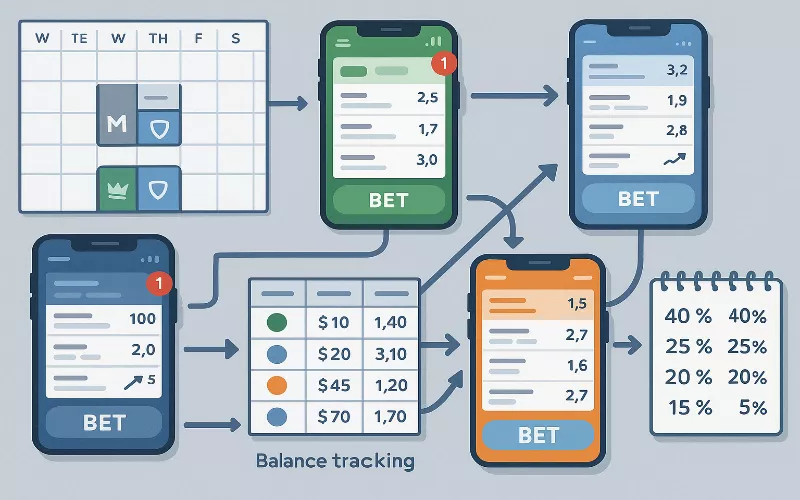
Decide what percentage of your total betting bankroll to keep in each app based on how you use them. Your primary app might hold 50% of your bankroll because you use it most frequently. Two secondary apps for line shopping might hold 20% each. A promotional arbitrage app might hold 10%. This structure ensures you have adequate funds in each app for realistic betting while not spreading money so thin that you can’t make meaningful bets anywhere.
Rebalance periodically perhaps monthly by withdrawing from apps with excess balance and depositing to apps that are depleted. This prevents the common problem where your preferred app runs empty while unused apps have funds sitting idle. Mobile apps make withdrawing and depositing quick enough that monthly rebalancing isn’t particularly burdensome.
Keep tracking sheets noting current balance in each app. Without this reference, you’ll lose track of where your money is distributed. A simple note file on your phone listing FanDuel: $430, DraftKings: $280, bet365: $190 gives you instant visibility into your total deployed bankroll and distribution.
Promotional Calendar Management
Each app runs different promotions on different schedules. DraftKings might offer profit boosts on Wednesdays. FanDuel might run same-game parlay insurance on Sundays. Caesars might have weekend deposit matches. Tracking which apps have which promotions active prevents you from missing value opportunities.
Some bettors maintain a simple calendar or spreadsheet noting recurring promotions by app and day. This lets you plan your betting to align with optimal promotional windows. If Tuesday is profit boost day on DraftKings, save your highest-confidence bets for Tuesday to use the boost. This level of optimization seems excessive until you calculate that using profit boosts on good bets rather than random bets adds several percent to your annual returns.
The calendar approach also prevents double-claiming or missing opt-in requirements. Some promotions require manual opt-in before betting or you don’t qualify. Tracking promotion details in one place means you check requirements before betting rather than discovering after your bet doesn’t qualify that you needed to opt in first.
Communication Between Apps
The apps don’t communicate with each other, which creates opportunities for promotional arbitrage but also creates potential for mistakes. Betting both sides of a game for guaranteed profit using promotions from different apps works because the apps can’t see your other positions. But accidentally placing the same bet twice on different apps happens surprisingly often when you’re rushing.
Some bettors use a bet confirmation habit screenshot every bet immediately after placing it. This creates a timestamped record in your camera roll showing exactly what you bet, when, and on which app. If you think you might have already bet Cowboys -3 on FanDuel but aren’t certain, checking recent screenshots confirms it. This prevents expensive duplicate bets.
Avoiding Mobile-Specific Traps
Mobile betting’s convenience creates psychological traps that don’t exist in other betting formats. Being aware of these traps is the first step toward not falling into them.
The Autopilot Betting Trap
Mobile betting can become so routine that you stop thinking carefully about each bet. You’re watching a game, you see a prop that seems interesting, you place a bet in eight seconds without real analysis. This autopilot betting tends toward -EV because you’re reacting to entertainment impulses rather than analytical edge identification.
The solution is forcing a deliberate pause before every bet. After you select your bet and enter the amount but before tapping “place bet,” stop for ten seconds. Ask yourself: “Why am I making this bet? What’s my analytical edge? Am I betting because I have reason to think this is +EV or because I’m bored and want action?” Ten seconds of forced reflection prevents many autopilot bets that you’d regret immediately after placing.
The Convenience Trap
The easier betting becomes, the more you’ll bet even if you don’t have good betting opportunities. If placing a bet required driving to a sportsbook, you’d only bet when you had strong convictions about games worth the drive. Mobile betting eliminates that filter you can bet on whatever game is happening now just because you’re bored.
Selective betting is essential for profitability. The best bettors place far fewer bets than the worst bettors because they only bet when they identify edges. Mobile betting’s convenience tempts you toward constant action rather than selective betting. Implementing rules like “maximum five bets per week” or “only bet games I’ve researched for 15+ minutes” creates artificial friction that convenience removed.
The Social Betting Trap
Mobile betting happens on the same device you use for social media, texting, and consuming content. The social context influences betting behavior. You’re in a group chat where everyone’s betting, so you bet too even though you have no edge. You see a betting influencer tout a play, so you copy it. The social pressure and FOMO push you toward bets you wouldn’t make independently.
Betting in social contexts is entertainment, not investment. If betting with friends while watching a game enhances enjoyment, that’s fine budget for it as entertainment spending. But recognize those bets are almost certainly -EV and keep them small and separate from your serious betting bankroll. Don’t confuse social gambling with strategic betting just because they both happen on the same mobile app.
Building Your System
Successful mobile betting requires building systematic processes that leverage mobile advantages while protecting against mobile dangers. Line shopping exploits mobile’s instant access to multiple books. Structured limits exploit mobile apps’ responsible gambling tools to enforce discipline. Bonus optimization exploits promotional overlap across apps. Each strategy stacks to create meaningful edges that compound over hundreds of bets.
The foundation is honesty about your betting profile and discipline level. If you know you’re impulsive during bad runs, set deposit and loss limits that you can’t override. If you know you’re susceptible to chasing, implement mandatory cool-down periods between bets. If you know you’ll ignore complex strategies, simplify to the essentials you’ll actually follow. The best strategy is one you’ll execute consistently, not the theoretically optimal strategy you’ll abandon after two weeks.
Start with one or two strategies from this guide rather than trying to implement everything simultaneously. Maybe start with line shopping plus deposit limits. Master those until they’re habitual. Then add promotional optimization. Then add tracking and analytics. Building a systematic approach incrementally is more sustainable than overwhelming yourself with complexity immediately.
Mobile betting apps are tools that amplify both good and bad betting behaviors. If you’re making good betting decisions with discipline, mobile apps help you execute better through line shopping, promotional leverage, and information access. If you’re making poor betting decisions impulsively, mobile apps enable you to lose money faster than ever before. The apps are neutral your strategy and discipline determine whether mobile betting helps or hurts your results.
Find more daily picks and news on our betting platform.
