
Betting App Security: How to Stay Safe and Bet Responsibly
 Available in US
Explore comprehensive strategies for betting app security in 2026, covering technical safeguards, financial protection, and responsible gambling practices to ensure a safe and secure betting experience.
Table of Contents
- The Real Risks Nobody Talks About
- Identifying Legitimate vs Dangerous Apps
- Account Security Best Practices
- Financial Protection Strategies
- Understanding Responsible Gambling Tools
- Recognizing Problem Gambling Patterns
- Privacy and Data Protection
- What to Do When Things Go Wrong
- State Resources and Support Systems
- Building a Sustainable Approach
The Real Risks Nobody Talks About
Betting app security encompasses more than just preventing hackers from stealing your password. The most significant risks mobile bettors face aren’t external threats like fraud or identity theft those are real but relatively rare with licensed operators. The genuine dangers are psychological vulnerabilities that betting apps are deliberately designed to exploit, financial risks from poor bankroll management that mobile betting amplifies, and the subtle erosion of discipline that one-tap betting enables.
Most security guides focus on passwords and encryption while ignoring the fact that the primary threat to your financial wellbeing comes from yourself making impulsive decisions when betting is literally one tap away. An offshore scam site might steal your $500 deposit, which is terrible. But a licensed legitimate app can facilitate you losing $5,000 through tilt betting during a bad week because the psychological friction between impulse and execution essentially doesn’t exist anymore.
This isn’t to say traditional security doesn’t matter. Account takeovers, payment fraud, and identity theft are real concerns requiring real precautions. We’ll cover those thoroughly. But betting app security requires a broader framework that includes protecting yourself from behavioral patterns that licensed apps actively encourage because those patterns generate revenue. The apps aren’t malicious, but their business model depends on you betting more, not less. Their features optimize engagement, not your financial health.
Understanding this dynamic helps you approach betting app security holistically. You need technical safeguards like strong passwords and two-factor authentication. You need financial safeguards like deposit limits and separate banking accounts. And you need psychological safeguards like mandatory cool-down periods and self-awareness about your relationship with gambling. All three layers matter. Most bettors focus on one while neglecting the others.
The goal isn’t eliminating all risk betting inherently involves financial risk, and being alive involves some degree of security risk. The goal is understanding the actual threat landscape, implementing proportional protections, and building sustainable habits that let you bet safely long-term without either getting exploited by bad actors or destroying your own financial stability through compulsive behavior.
Identifying Legitimate vs Dangerous Apps
The first line of defense is only using apps that are actually legal, licensed, and regulated rather than falling for offshore operators or outright scams masquerading as legitimate sportsbooks.
Licensing Verification
Every legal betting app in the United States must hold licenses from state gaming commissions in each state where they operate. These licenses are displayed prominently somewhere in the app usually at the bottom of the home screen in small print, or in the “About” or “Legal” sections. If you can’t find clear licensing information within thirty seconds of looking, that’s a red flag.
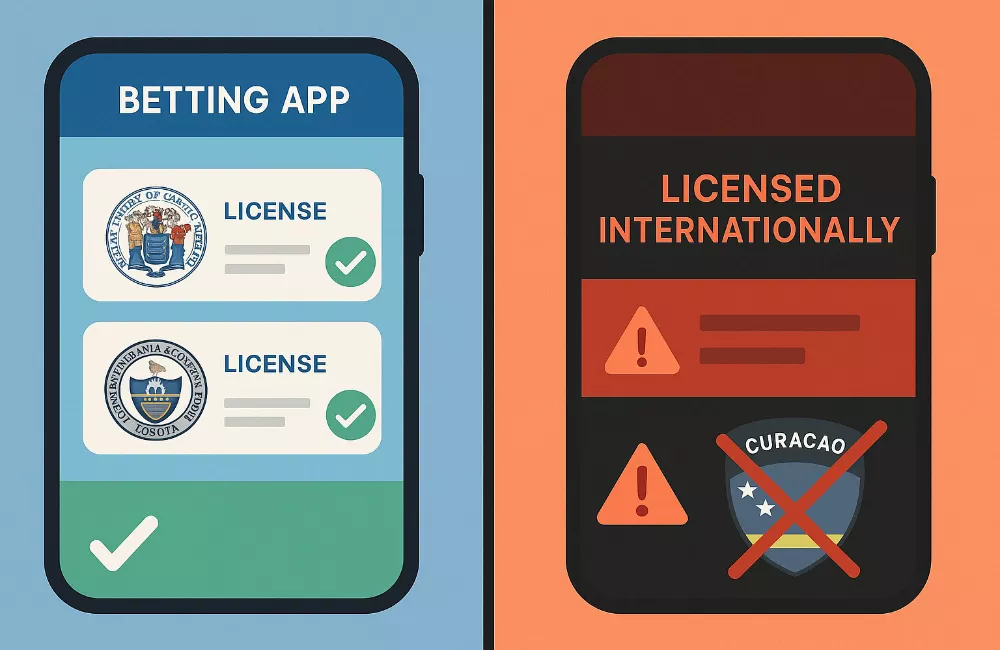
Legitimate licensing looks like this: “Licensed by the New Jersey Division of Gaming Enforcement” with a license number. Or “Pennsylvania Gaming Control Board License #XXXXX.” The licensing information references a real regulatory body in your specific state. You can verify these by visiting the state gaming commission’s website and checking their list of licensed operators.
Fake licensing claims are vague or reference jurisdictions that don’t regulate the way the app claims. “Licensed in Curacao” doesn’t mean the app is legal in the United States Curacao licenses offshore gambling sites that operate in legal gray areas. “Licensed internationally” is meaningless marketing speak. “Licensed and regulated” without specifying by whom is deliberately evasive language from operators who aren’t actually licensed where you’re using them.
Apps that are genuinely licensed by US state regulators include FanDuel, DraftKings, BetMGM, bet365, Caesars, Fanatics, ESPN Bet, and Hard Rock Bet among others. These operators invested millions in licensing fees and compliance infrastructure to operate legally. They’re heavily regulated and required to protect customer funds, maintain security standards, and operate fairly. Using licensed operators eliminates most fraud risk immediately.
Red Flags for Dangerous Apps
Offshore betting sites targeting Americans operate in murky legal territory and expose you to risks licensed operators don’t. The warning signs are usually obvious if you’re looking. The app isn’t available in official app stores you need to download an APK file directly from their website. This bypasses Apple and Google’s vetting processes, which while imperfect, do filter out the most egregious scams.
The payment methods they accept are suspicious. Legitimate apps use standard payment processors like PayPal, Venmo, major credit and debit cards. Sketchy operators push you toward cryptocurrency, wire transfers, or prepaid cards because these methods are harder to reverse if something goes wrong. If an app pressures you to use Bitcoin or Western Union, that’s a massive red flag.
The customer service is evasive or nonexistent. Try asking a specific question before depositing. Legitimate operators have multiple support channels live chat, email, sometimes phone. They respond relatively quickly with substantive answers. Sketchy operators have an email address that responds slowly with generic copy-paste responses that don’t actually address your question, if they respond at all.
The promotional offers sound too good to be true because they are. “Deposit $100, get $500 free” vastly exceeds what licensed operators can sustainably offer. These bonuses come with impossible playthrough requirements or hidden terms that make actually withdrawing winnings nearly impossible. Licensed operators compete aggressively with promotions, but there are economic limits to what they can offer offshore sites make promises they have no intention of honoring.
The Offshore Gambling Trap
Some offshore betting sites have been operating for years and have decent reputations within the gambling community. They’re not necessarily scams in the sense of stealing deposits immediately. But they operate outside US legal frameworks, which creates several problems even if they’re relatively honest.
Your deposits aren’t protected by US banking regulations or gaming commission oversight. If the site decides to close your account and keep your balance, you have essentially no recourse. You can’t sue them effectively because they’re in foreign jurisdictions. You can’t report them to authorities because they were never legal in the first place. Chargebacks through your credit card are difficult when you initiated the transaction willingly.
Withdrawal problems are common even with “reputable” offshore sites. They might pay quickly for small withdrawals but delay or deny large withdrawals using pretextual reasons. They might request endless documentation for “verification” when you try to withdraw significant sums. These delays are often designed to frustrate you into gambling the money back rather than successfully withdrawing.
Tax implications are complicated. Legitimate operators report your gambling winnings to the IRS and provide documentation. Offshore sites don’t, which doesn’t mean you don’t owe taxes you legally do. But you lack proper documentation, which creates problems if you’re audited. The risk/reward ratio of using offshore sites is terrible when legal alternatives exist.
Account Security Best Practices
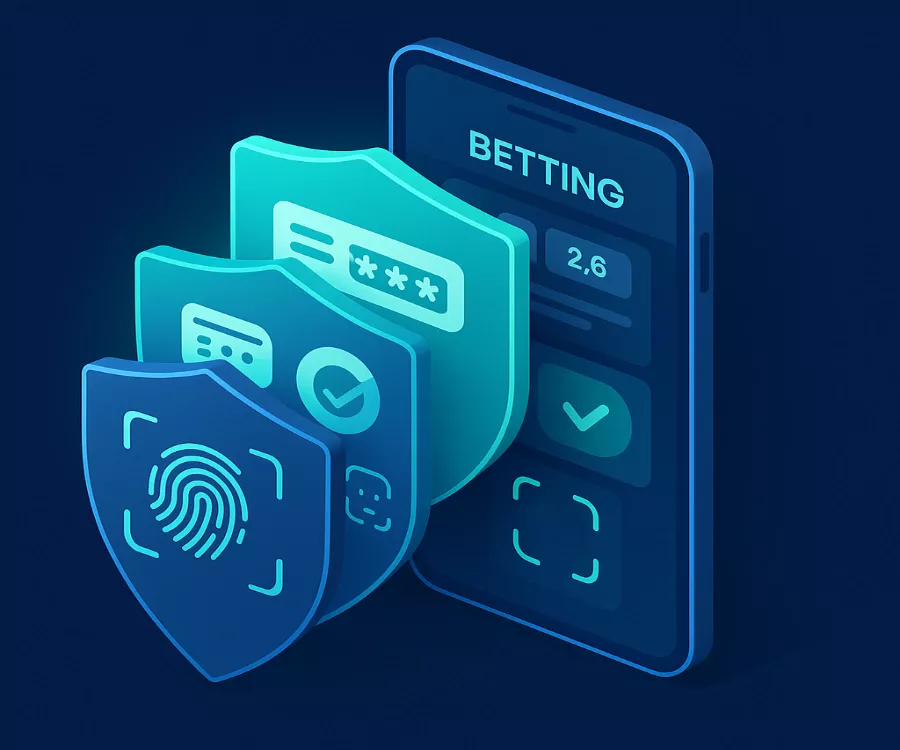
Protecting your betting account from unauthorized access requires layering multiple security measures. No single protection is perfect, but combining several makes your account substantially harder to compromise.
Password Security
Strong, unique passwords are the foundation. “Strong” means long at least 12 characters, preferably 16+. It means unpredictable random combinations of uppercase, lowercase, numbers, and symbols rather than dictionary words or personal information. It means unique never reused from other accounts, because data breaches happen constantly and attackers try stolen passwords across multiple sites.
The only practical way to manage truly strong unique passwords across multiple betting apps plus all your other accounts is using a password manager. Applications like 1Password, Bitwarden, or LastPass generate random passwords, store them encrypted, and auto-fill them when you log in. You remember one master password to unlock the manager. Everything else is random 20-character strings you never need to remember.
The resistance people have to password managers is understandable but misplaced. “What if the password manager gets hacked?” If a reputable password manager gets breached, they use encryption that makes your stored passwords unreadable even to the attacker. “What if I forget my master password?” You write it down and store it somewhere physically secure. “Isn’t typing my password easier than opening a manager?” Password managers auto-fill faster than manual typing once configured.
Avoid password patterns like “FanDuel2026!” for your FanDuel account and “DraftKings2026!” for DraftKings. These feel unique because they reference different services but are essentially the same password with one word swapped. Attackers know this pattern and will try variations if they compromise one account.
Two-Factor Authentication
Two-factor authentication requires something you know (your password) plus something you have (your phone) to log in. Even if someone steals your password, they can’t access your account without also having physical access to your phone. This is the single most effective security upgrade beyond strong passwords.
Most betting apps support 2FA via SMS codes sent to your phone number. When you log in, they text a six-digit code that you must enter within a few minutes. This isn’t perfect sophisticated attackers can do SIM swap attacks to intercept SMS codes but it stops casual account takeovers completely and significantly raises the bar for serious attackers.
Authenticator apps like Google Authenticator or Authy are more secure than SMS for 2FA. They generate time-based codes that change every thirty seconds. Even if someone intercepts your SMS messages, they can’t get authenticator app codes without physically accessing your phone and knowing your phone’s passcode. Setup takes five minutes and provides substantially better security.
The inconvenience of 2FA is real but minimal. You enter a code once per device typically, then the app remembers that device for extended periods. For an account containing hundreds or thousands of dollars, entering a six-digit code occasionally is negligible effort for significant protection.
Biometric Authentication
Face ID and fingerprint scanning provide convenient security for quick authentication without entering passwords constantly. These are stored locally on your device using secure hardware enclaves they never leave your phone, and even Apple or Google can’t access them. This makes them quite secure against remote attacks.
The risk with biometric authentication is physical access. Someone can potentially force you to unlock your phone with your face or finger, whereas they can’t force you to reveal a password you claim to have forgotten. For most users in most situations, this risk is theoretical. But if you’re concerned about physical coercion or government access, biometric authentication adds vulnerability that passwords don’t have.
Enable biometric authentication for betting apps if your phone supports it. The convenience means you’ll actually keep your account secured rather than disabling security features because entering passwords is annoying. Perfect security that’s too inconvenient to use consistently is worse than good security you actually use.
Login Monitoring and Alerts
Enable login notifications if your betting app offers them. These alert you via email or SMS whenever your account is accessed from a new device or location. If you receive a notification about a login you didn’t perform, you know immediately to change your password and contact support.
Check your account’s login history periodically most apps show recent login times and locations. If you see access from locations you’ve never been or at times you weren’t using the app, investigate immediately. Early detection of unauthorized access prevents small problems from becoming large problems.
Financial Protection Strategies
Protecting the money in your betting accounts requires thinking beyond just account security to broader financial risk management.
Separate Banking for Betting
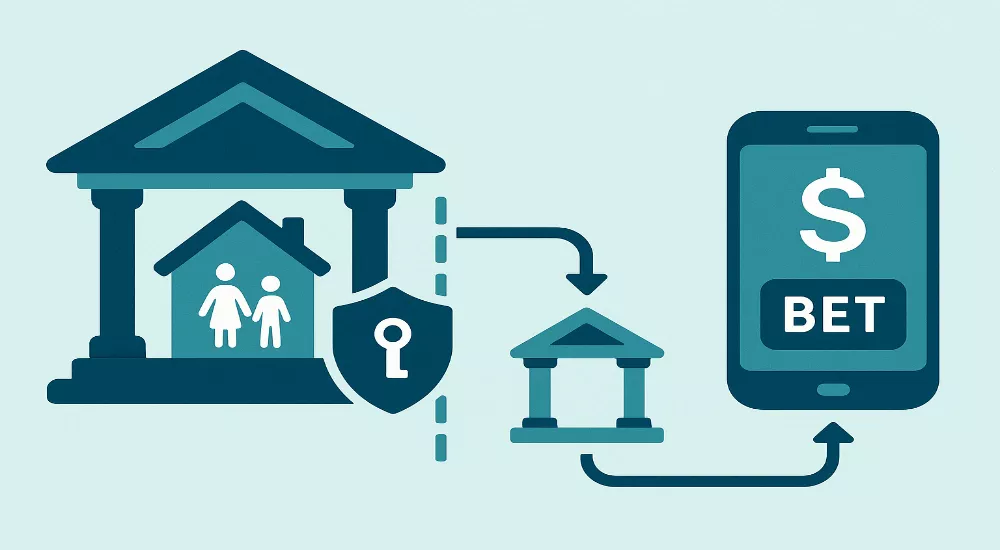
Opening a separate checking account used exclusively for betting creates both security and discipline benefits. Link only this account to your betting apps, not your primary checking account. Fund the betting account monthly with your gambling budget. When it’s empty, you’re done betting that month.
This separation limits your financial exposure if a betting app has a data breach or if your betting app account is compromised. An attacker can drain your betting account, but they can’t access your primary checking account because it’s not linked anywhere. The damage is contained to your betting budget rather than your entire banking relationship.
The separate account also prevents accidental overspending. You can’t impulsively deposit more during a bad streak because your primary funds aren’t accessible through the app. You’d need to manually transfer money from your main account to your betting account, wait for it to clear, then deposit to the app. That multi-step process introduces enough friction to break the cycle of chasing losses.
Deposit and Withdrawal Best Practices
Use payment methods that provide fraud protection and transaction visibility. Credit and debit cards offer chargeback rights if you have disputes. PayPal and Venmo provide purchase protection in some cases. Bank transfers are secure but harder to reverse. Prepaid cards like Play+ offer a layer of separation but lack fraud protection.
Keep records of all deposits and withdrawals. Screenshot confirmation pages. Save email confirmations. Track deposits and withdrawals in a spreadsheet with dates, amounts, and payment methods. If you have a dispute with a betting app about a missing deposit or delayed withdrawal, documentation is essential.
Withdraw regularly rather than leaving large balances in betting apps indefinitely. Betting apps are safe places to store funds, but they’re not banks your money isn’t FDIC insured. Withdraw winnings weekly or bi-weekly to your bank account. This both reduces risk exposure and psychologically separates your winnings from your betting bankroll, making you less likely to bet away profits.
Understanding Betting App Fund Segregation
Licensed betting operators are required by state regulations to maintain customer funds in segregated accounts separate from operational funds. This means your deposits are legally distinct from the company’s business capital and can’t be seized by creditors if the operator goes bankrupt.
This regulation protects you substantially if FanDuel or DraftKings were to suddenly fail financially, your balance should be safe and accessible. Compare this to offshore operators where your deposit is just money in their business account with no legal segregation. When offshore sites disappear, customer funds disappear with them.
The regulation isn’t perfect protection there have been cases of poor implementation or fraud that resulted in customer fund losses even with licensed operators. But the regulatory framework provides dramatically more protection than unregulated alternatives. Choose licensed operators partly for this financial protection.
Understanding Responsible Gambling Tools
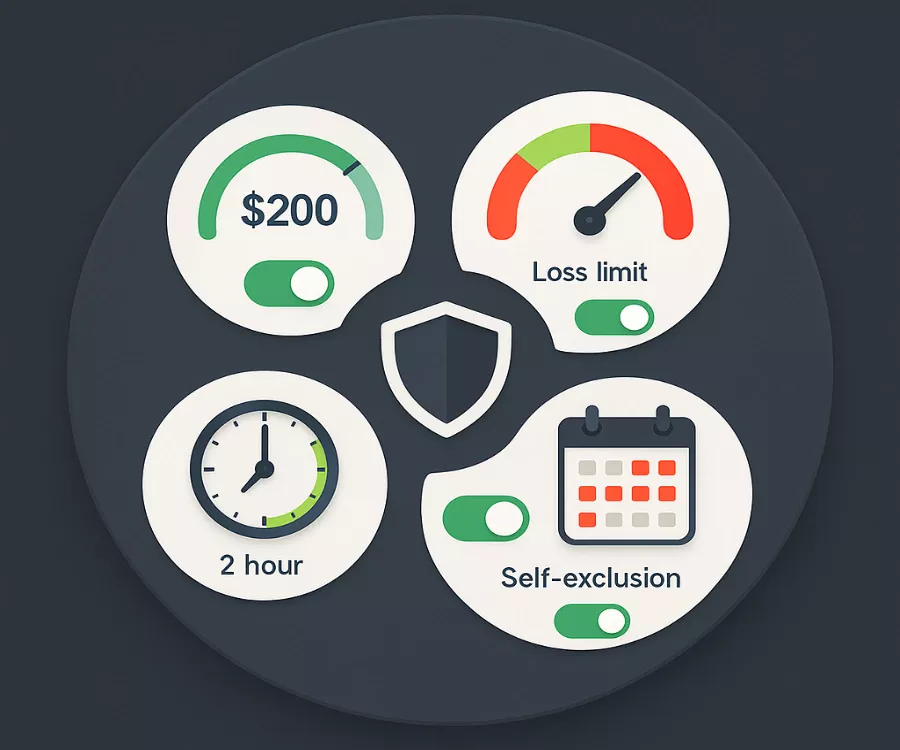
Every licensed betting app includes responsible gambling features mandated by state regulations. These aren’t just legal window dressing they’re powerful tools for maintaining control when betting apps are designed to maximize engagement.
Deposit Limits: Your First Line of Defense
Deposit limits let you specify maximum amounts you can deposit over specific time periods daily, weekly, or monthly. Once you hit the limit, the app won’t allow additional deposits until the next period starts. This is structural bankroll management that overrides your emotional state.
The critical feature is the delay in increasing limits. When you set a $200 weekly deposit limit, you can’t immediately raise it to $500 during a bad streak. You submit a request to increase the limit, then wait 24 to 72 hours while the increase is pending. Most limit increase requests submitted during emotional moments get canceled by the same person after they calm down. The delay is the entire point.
Set deposit limits before you start betting, when your judgment is clear. Choose amounts you’re genuinely comfortable losing entirely. Remember that your limit should be losing capacity you should be financially and emotionally fine with depositing $200 weekly and never winning any of it back. If that thought creates anxiety, your limit is too high.
Loss Limits and Time Limits
Loss limits cap your maximum losses over specific periods. A $300 weekly loss limit means once you’ve lost $300 in a week, you can’t place more bets until the next week regardless of your remaining balance. This protection is distinct from deposit limits you might deposit $500 but only lose $300 before the limit stops you, preserving $200 for the next week.
Time limits track how long you’ve been actively using the app. You might set a two-hour daily time limit. After two hours of active use, the app logs you out and prevents access for the rest of the day. This combats marathon betting sessions where hours disappear and you make dozens of decisions under mental fatigue.
Reality checks are periodic pop-ups showing how long you’ve been betting and your current profit/loss. You might set reality checks to appear every sixty minutes. They force you to consciously acknowledge your current session statistics rather than losing track of time and money. The interruption itself provides a circuit breaker opportunity to stop.
With a secure account, you are ready to apply advanced mobile betting strategies.
Self-Exclusion: The Nuclear Option
Self-exclusion lets you voluntarily ban yourself from betting for specific periods six months, one year, five years, or permanently. Once activated, you can’t access your account to place bets during the exclusion period. Some states operate unified self-exclusion databases where one exclusion covers all licensed operators in that state simultaneously.
This is the strongest tool available for people who recognize they can’t control their gambling. Activating self-exclusion requires acknowledging you have a problem serious enough to need external enforcement, which many people resist. But that acknowledgment is often the first step toward addressing problem gambling meaningfully.
Self-exclusion can usually be reversed, but the reversal process has deliberate delays and friction typically requiring contacting customer support, confirming your request in writing, and waiting weeks. This prevents impulsive decisions to reactivate during moments of wanting to chase losses or boredom.
Cool-Down Periods and Account Pauses
Some apps offer temporary breaks or cool-down periods shorter than formal self-exclusion. You might pause your account for 24 hours, 72 hours, or a week. This provides breathing room during bad streaks or when you recognize you’re not in a good mental state for betting.
The advantage of cool-down periods is they’re less psychologically loaded than self-exclusion. Using a 48-hour pause doesn’t require admitting you have a problem, just recognizing you need a short break. This lower barrier makes people more likely to use the feature proactively rather than only in crisis.
Recognizing Problem Gambling Patterns
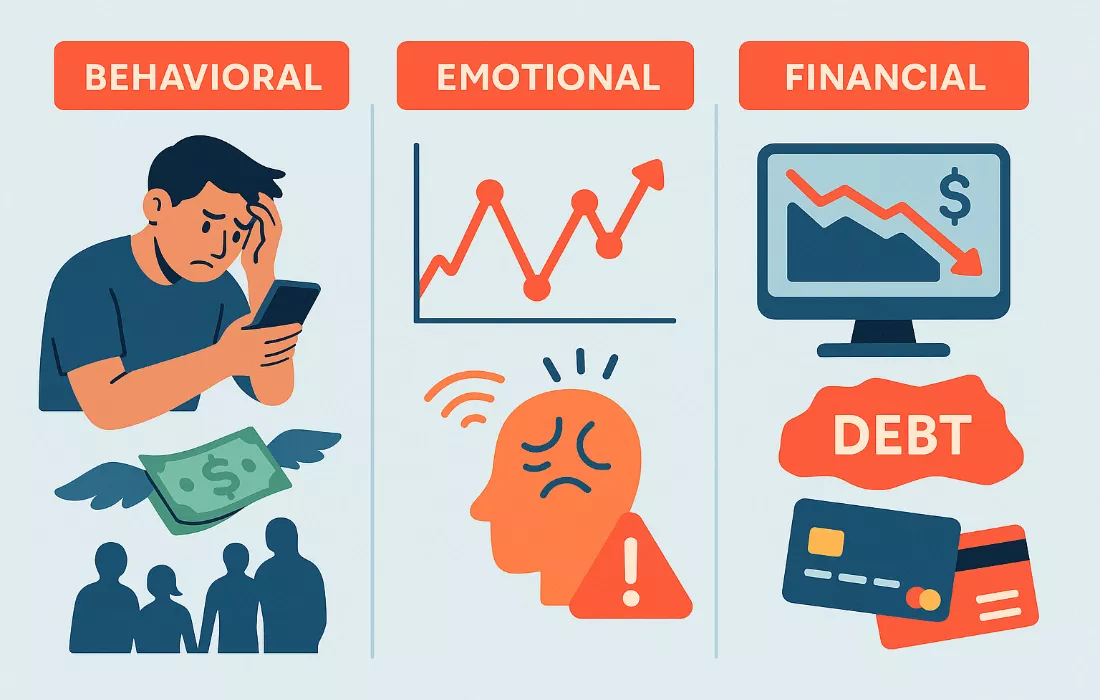
Most problem gambling develops gradually rather than suddenly. Recognizing early warning signs in yourself helps you intervene before patterns become entrenched.
Behavioral Warning Signs
Betting more money than you planned or can afford is the clearest warning sign. You set a $200 weekly budget but find yourself depositing $400 or $600. You bet money intended for bills. You borrow money to fund betting or to cover losses. These indicate you’ve lost financial control.
Chasing losses aggressively shows gambling is affecting your decision-making. You lose $100 and immediately bet $200 trying to get even rather than accepting the loss and stopping. The urge to “get it back” overrides rational bankroll management. This pattern typically accelerates losses.
Lying to family or friends about betting activity suggests shame or awareness that your gambling is problematic. You downplay losses, hide betting from your partner, or make up explanations for where money went. The deception itself indicates you recognize something is wrong.
Neglecting responsibilities to bet shows betting is taking priority over important life areas. You skip work to watch games and bet. You ignore family to focus on betting. You stop hobbies you used to enjoy because betting consumes your free time and mental energy.
Emotional Warning Signs
Feeling anxious or irritable when not betting suggests psychological dependence. Gambling has become your primary coping mechanism for boredom, stress, or negative emotions. You bet to feel normal rather than betting for entertainment.
Mood swings tied to betting outcomes indicate emotional volatility around gambling. Winning creates euphoria disproportionate to the actual money won. Losing creates despair disproportionate to the actual money lost. Your emotional state becomes dependent on gambling results rather than stable aspects of life.
Thinking constantly about betting even when not actively betting shows mental preoccupation. You think about upcoming games during work. You research bets when you should be sleeping. You can’t enjoy watching sports without having action on games.
Financial Warning Signs
Increasing bet sizes over time without corresponding bankroll growth shows loss of financial discipline. You started betting $20 per game and slowly drifted to $100 per game without consciously deciding to increase stakes. This unit size creep often precedes major losses.
Difficulty withdrawing winnings suggests you’re treating betting as an emotional activity rather than a financial one. When you win, you immediately bet profits rather than withdrawing them. Your account balance fluctuates wildly but trends toward zero over time regardless of winning periods.
Financial problems emerging that correlate with betting activity credit card debt, missed bill payments, reduced savings indicate gambling is damaging your financial health. Even if you don’t consciously connect these problems to betting, the correlation reveals impact.
When to Seek Help
If you recognize multiple warning signs in yourself, outside help is appropriate. The National Council on Problem Gambling operates a 24/7 helpline at 1-800-GAMBLER. Trained counselors provide confidential support, assess your situation, and connect you with local resources.
Gamblers Anonymous operates support groups in most major cities. These follow a 12-step model similar to Alcoholics Anonymous and provide community support from people who’ve experienced problem gambling. Many people find group support helpful for maintaining recovery.
Professional counseling with therapists specializing in gambling addiction provides clinical treatment. Cognitive behavioral therapy has strong evidence for treating problem gambling by addressing underlying thought patterns and behaviors. Many insurance plans cover addiction treatment including gambling addiction.
Privacy and Data Protection
Betting apps collect extensive data about your betting behavior, device, location, and financial transactions. Understanding what they collect and how they use it helps you make informed privacy decisions.
What Data Betting Apps Collect
Personal identification data includes everything you provided during registration name, address, birthdate, Social Security number, copies of your driver’s license. This is legally required for identity verification and age confirmation. It’s stored encrypted and subject to data protection regulations.
Financial data includes your payment methods, transaction history, deposits, withdrawals, and betting history. Apps know exactly how much you’ve wagered, won, lost, and when. This data is used for account management, regulatory reporting, fraud detection, and internal analytics about user behavior.
Location data is tracked constantly through GPS, Wi-Fi, and cellular signals to verify you’re within state boundaries as required by law. Apps know your precise location every time you open the app or place a bet. This data is sensitive but necessary for legal compliance.
Behavioral data includes which games you view, how long you spend on different pages, which bets you consider but don’t place, and your overall engagement patterns. This data trains algorithms that personalize your experience and optimize the app’s engagement mechanics.
How Apps Use Your Data
Regulatory compliance is the primary legitimate use. State gaming commissions require operators to maintain detailed records of all gambling activity, verify customer identities, report large transactions, and track problem gambling indicators. Your data is shared with regulators as required by law.
Marketing and personalization uses your data to show you relevant promotions and customize your app experience. If you bet NFL frequently, you’ll see more NFL promotions. If you respond well to certain promotional formats, you’ll see more of those. This personalization is designed to increase your engagement and betting activity.
Fraud detection algorithms analyze your betting patterns, financial transactions, and device behavior to identify suspicious activity. Unusual login locations, abnormal betting patterns, or high-value transactions that don’t match your history trigger reviews. This protects both you and the operator from fraud.
Third-party sharing is common but regulated. Apps may share data with payment processors, identity verification services, marketing partners, and analytics companies. Licensed operators must disclose this sharing in privacy policies and are restricted in what they can share. Read privacy policies to understand specific practices.
Protecting Your Privacy
Read privacy policies before using betting apps, focusing on what data is collected, how it’s used, who it’s shared with, and how long it’s retained. Most people never read these policies, but they’re legally binding and reveal important information about how your data is handled.
Use privacy-focused payment methods when possible. PayPal and similar services provide a layer of separation between betting apps and your bank account. Prepaid cards offer even more separation but less convenience. The tradeoff between privacy and convenience is yours to navigate.
Disable optional data sharing if apps offer it. Some apps request permission to access your contacts, photos, or other device data that isn’t strictly necessary for betting. Deny these permissions unless you understand why they’re needed and trust the app’s data handling.
Be aware that US privacy protections are weaker than European standards. Americans don’t have the same data rights as Europeans under GDPR. Licensed betting operators must follow state regulations but have more freedom to collect and use data than European counterparts.
What to Do When Things Go Wrong
Despite precautions, problems occasionally arise. Knowing how to respond effectively minimizes damage and increases the likelihood of resolution.
Compromised Account Response
If you suspect unauthorized account access, act immediately. Change your password from a secure device not the same device you suspect might be compromised. Enable two-factor authentication if you haven’t already. Contact customer support and inform them of suspected unauthorized access.
Check your transaction history for unauthorized deposits, withdrawals, or bets. Document everything with screenshots showing unauthorized activity. File a formal complaint with the betting app’s support team. Most licensed operators will investigate and, if they confirm unauthorized access, will restore your balance to its state before the compromise.
If financial accounts linked to your betting app were accessed, contact those financial institutions immediately. Freeze cards if necessary. Report fraud to your bank. File a police report if significant amounts were stolen this creates official documentation that can be required for insurance claims or legal action.
Dispute Resolution Process
For disputes with betting apps about bet settlements, promotional terms, or withdrawal problems, start with customer support. Explain the issue clearly with specific details dates, transaction IDs, screenshots. Many disputes resolve at this level through support agents with authority to make decisions.
If customer support doesn’t resolve the issue satisfactorily, escalate to supervisor level. Ask to speak with or be contacted by a supervisor or manager. Higher-level support often has more authority and better understanding of complex situations.
If internal escalation fails, file a complaint with your state’s gaming commission. Every licensed operator must respond to regulatory complaints. Gaming commissions have enforcement authority that usually motivates operators to resolve disputes quickly. This is your strongest lever for serious disputes with licensed operators.
For payment disputes involving credit cards or PayPal, you may have chargeback rights. However, use chargebacks as a last resort. Betting apps may close your account permanently if you file chargebacks, and you lose access to any remaining balance. Exhaust other dispute resolution methods first.
Recovering from Problem Gambling
If you recognize problem gambling in yourself and want to stop, start with self-exclusion from all betting apps you use. This creates an external barrier preventing impulsive returns to gambling during recovery.
Seek professional help through the resources mentioned earlier NCPG helpline, Gamblers Anonymous, or professional counseling. Recovery typically requires external support. Very few people successfully address serious problem gambling alone.
Address financial damage systematically. If you’ve accumulated debt, create a repayment plan. If you’ve neglected bills, prioritize getting current. If you’ve hidden financial problems from family, consider disclosing and seeking support. Financial recovery follows behavioral recovery you need to stop problematic gambling before you can rebuild financially.
Identify and address underlying issues that gambling was masking. Many problem gamblers use gambling to cope with stress, depression, anxiety, boredom, or relationship problems. Professional counseling helps identify these underlying issues and develop healthier coping mechanisms.
State Resources and Support Systems
Every state with legal betting operates resources for problem gambling. These are funded by gambling tax revenue and available at no cost to residents.
State Problem Gambling Hotlines
Most states operate 24/7 problem gambling helplines providing confidential support, assessment, and referrals. These connect you with counselors trained specifically in gambling addiction. Numbers are typically toll-free and don’t appear on phone bills for privacy.
The national 1-800-GAMBLER hotline operates in most states and routes calls to your state’s specific program. Some states have their own numbers. All major betting apps display problem gambling helpline information prominently in their responsible gambling sections.
Self-Exclusion Programs
State-operated self-exclusion programs let you ban yourself from all licensed gambling in the state not just betting apps but also casinos and racetracks. This provides more comprehensive protection than self-excluding from individual apps separately.
Enrollment processes vary by state but typically require submitting a form with identification and specifying your exclusion period. Some states offer online enrollment, others require in-person or mailed applications. The process usually takes days to weeks to fully implement across all operators.
Violating self-exclusion has legal consequences in most states. If you’re on the exclusion list and attempt to gamble, operators may confiscate winnings and you could face criminal charges. This enforcement makes self-exclusion effective there are real consequences for circumventing it.
Treatment Programs
Many states fund problem gambling treatment programs offering free or subsidized counseling for residents. These programs provide individual counseling, group therapy, and family counseling focused specifically on gambling addiction.
Treatment program quality and availability vary significantly by state. States with mature gambling industries like Nevada, New Jersey, and Pennsylvania typically have more robust programs. Newer gambling states are still developing their treatment infrastructure.
Check your state gaming commission’s website for problem gambling resources including hotline numbers, treatment program directories, and educational materials. These state resources exist precisely because gambling expansion creates problem gambling, and regulators recognize the need for support systems.
Building a Sustainable Approach
Betting app security is ultimately about sustainable practices rather than perfect protection. No security is unbreakable. No self-control is infinite. No regulatory system prevents all problems. The goal is building layered defenses that collectively create a safe environment for responsible betting.
Technical security strong passwords, two-factor authentication, licensed operators prevents external threats. Financial security separate accounts, withdrawal discipline, deposit limits prevents catastrophic losses. Psychological security self-awareness, reality checks, support systems prevents compulsive behavior. All three layers matter.
The betting app ecosystem is designed to maximize engagement, not to protect your bankroll or mental health. That’s not a moral judgment it’s economics. Apps profit when you bet more. Understanding this dynamic helps you use betting apps consciously rather than being used by them. The tools to bet safely exist, but you must actively implement them. Apps won’t do it for you.
If betting remains entertaining and affordable for you, enjoy it. If you find yourself betting more than planned, hiding behavior, or experiencing financial stress from gambling, those are signals to intervene. The earlier you recognize problems and use available tools, the less damage occurs. Problem gambling is progressive small issues become large issues if ignored.
The best betting app security is the security you actually use consistently. Implement the protections that fit your life and risk profile. Maybe that’s two-factor authentication plus deposit limits. Maybe it’s separate banking plus weekly withdrawal discipline. Maybe it’s self-exclusion and professional counseling. Choose based on honest assessment of your needs and follow through. The infrastructure exists to bet safely use it deliberately.
Get the safest recommendations directly from our front page.
